
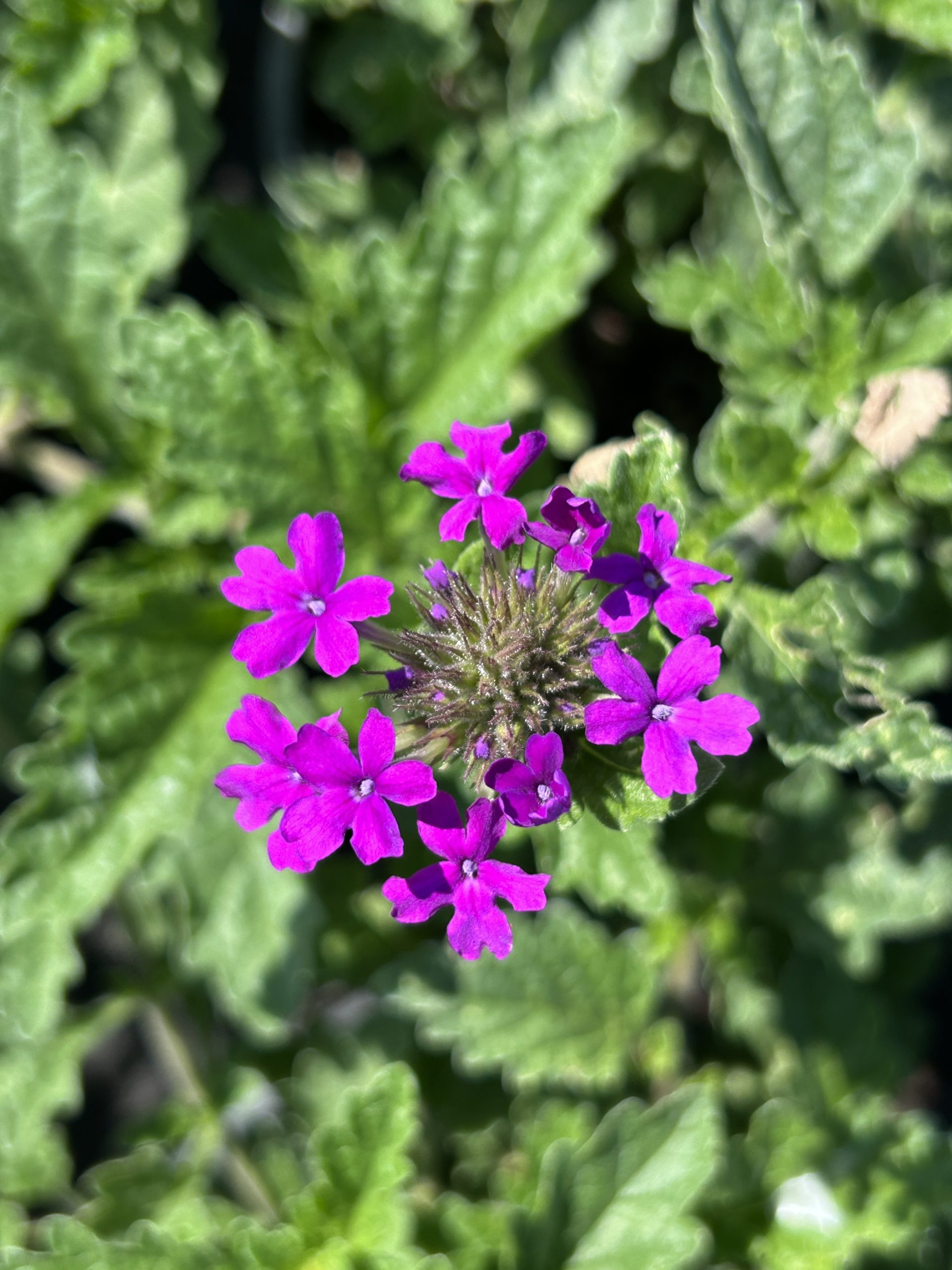
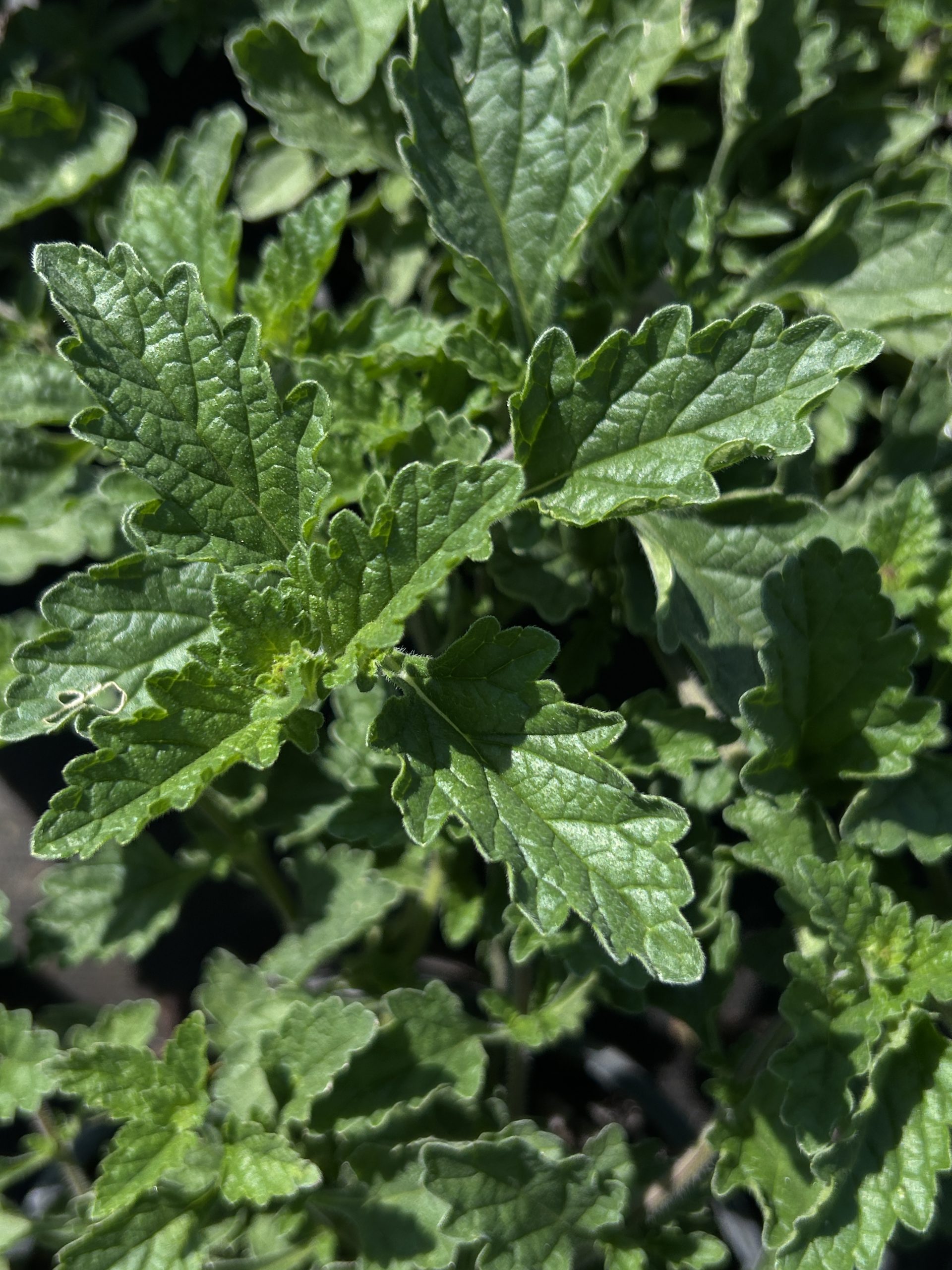
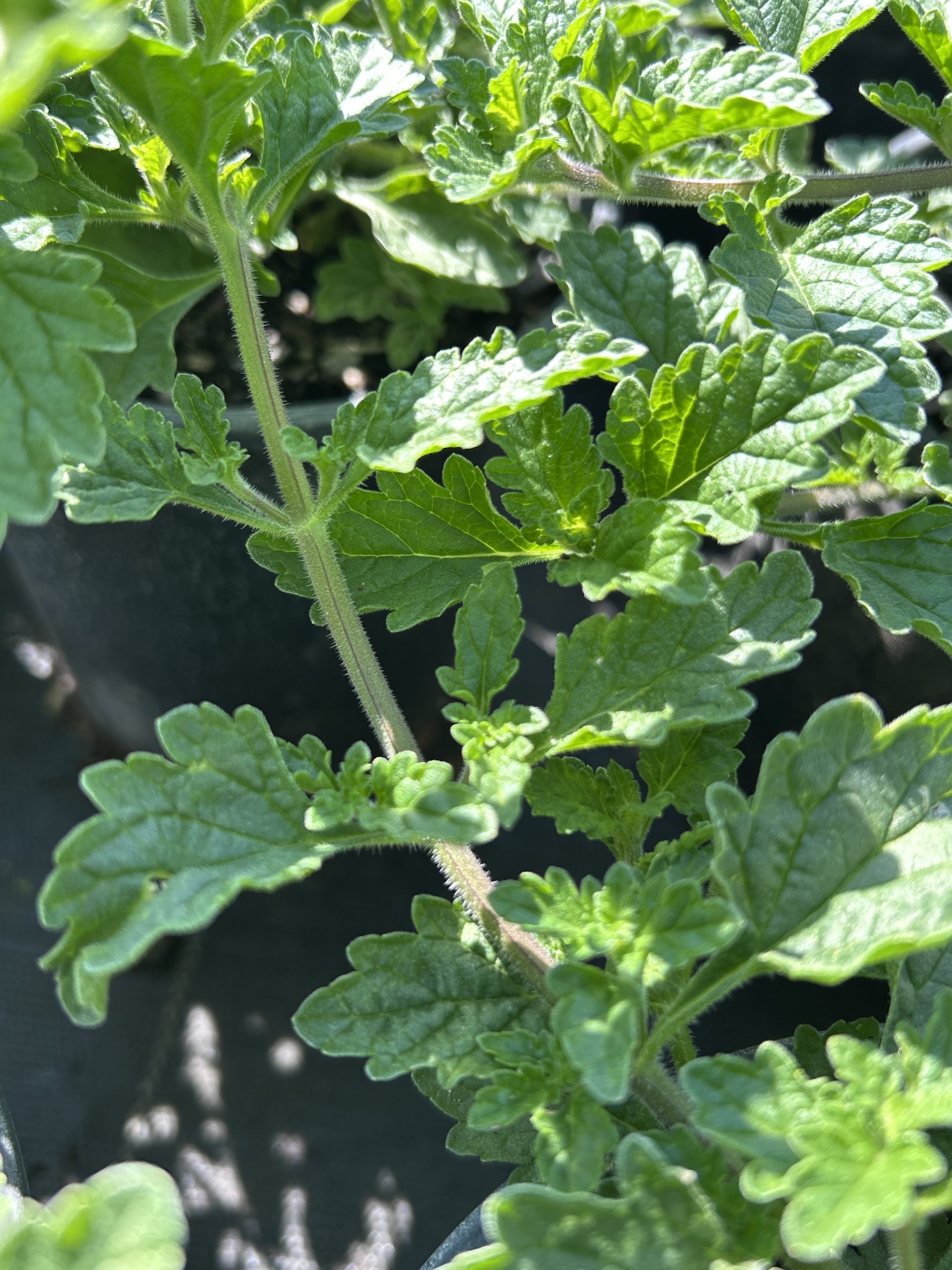
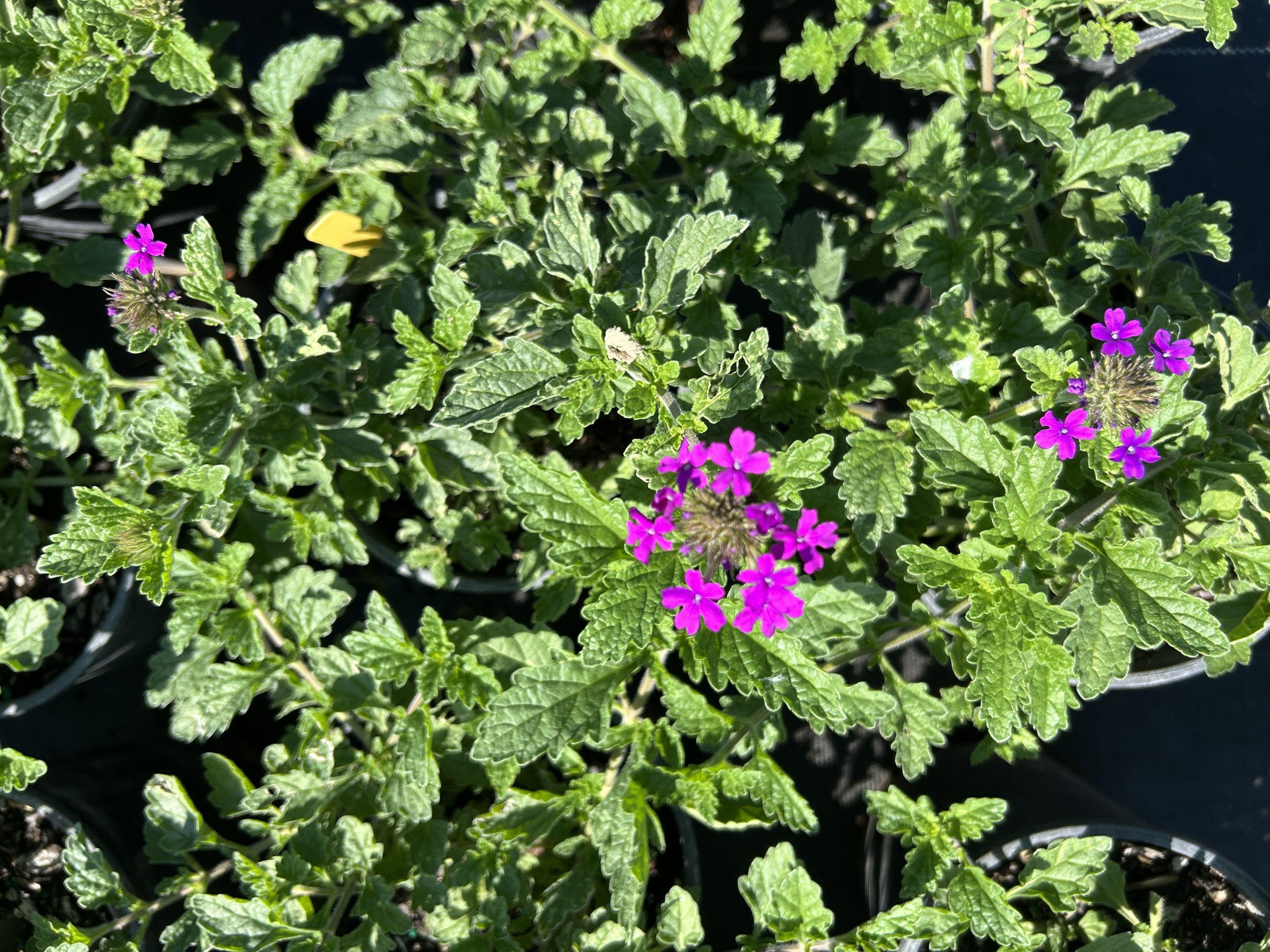
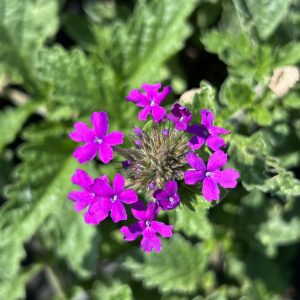
Purple trailing verbena (Glandularia canadensis), likely the cultivar ‘Homestead Purple,’ is a spreading perennial known for its vivid purple-magenta flower clusters.
It grows best in full sun and well-drained soil and becomes moderately drought-tolerant once established. Its nectar-rich flowers attract butterflies, bees, and other beneficial pollinators. Purple trailing verbena typically blooms from spring through fall, especially when spent flowers are removed periodically. Its spreading habit, heat tolerance, and long flowering season make it an excellent choice for borders, containers, slopes, and pollinator-friendly landscapes.
Typical Uses:
Purple trailing verbena (Glandularia canadensis) is valued for its bright flowers, extended blooming season, and low-growing form. Its primary uses include:
- Garden Color: Bright purple-magenta flowers add long-lasting color to perennial borders, flower beds, and native plant gardens.
- Pollinator Attraction: Nectar-rich blooms attract butterflies, bees, and other beneficial insects throughout the growing season.
- Ground Cover: Its spreading stems help cover open soil in sunny areas and create a colorful landscape border.
- Container Planting: The trailing growth habit works well in hanging baskets, raised planters, and mixed containers.
ESTABLISHMENT AND CARE INSTRUCTIONS:
Planting and caring for purple trailing verbena is simple with these guidelines:
- Planting: Select a location receiving at least six hours of direct sunlight daily. Plant in well-drained soil, spacing plants approximately 18–24 inches apart.
- Watering: Water regularly during establishment, allowing the soil to dry slightly between waterings. Once established, the plant is moderately drought-tolerant but benefits from occasional watering during extended dry periods.
- Pruning: Remove spent flowers and lightly trim long or untidy stems to encourage branching, compact growth, and additional blooms.
- Pest and Disease Resistance: Generally low-maintenance but may occasionally experience spider mites, aphids, or powdery mildew. Good air circulation and well-drained soil help prevent problems.
- Winter Care: After frost causes the foliage to die back, leave the stems for winter protection or trim them in late winter. Cut back damaged growth before new spring growth begins.
SPECIAL FEATURES AND USAGE:
- Pollinator Gardens: Provides nectar for butterflies, bees, and other pollinators from spring through fall.
- Rock Gardens and Slopes: Its spreading habit and preference for well-drained soil make it suitable for rock gardens, slopes, and raised beds.
- Landscape Borders: Forms a colorful, low-growing edge along sidewalks, pathways, and flower beds.
- Heat-Tolerant Plantings: Performs well in hot, sunny Oklahoma landscapes once its root system is established.
- Erosion Reduction: Spreading stems help cover exposed soil and may assist with reducing minor surface erosion on gentle slopes.
Reviews
There are no reviews yet.