
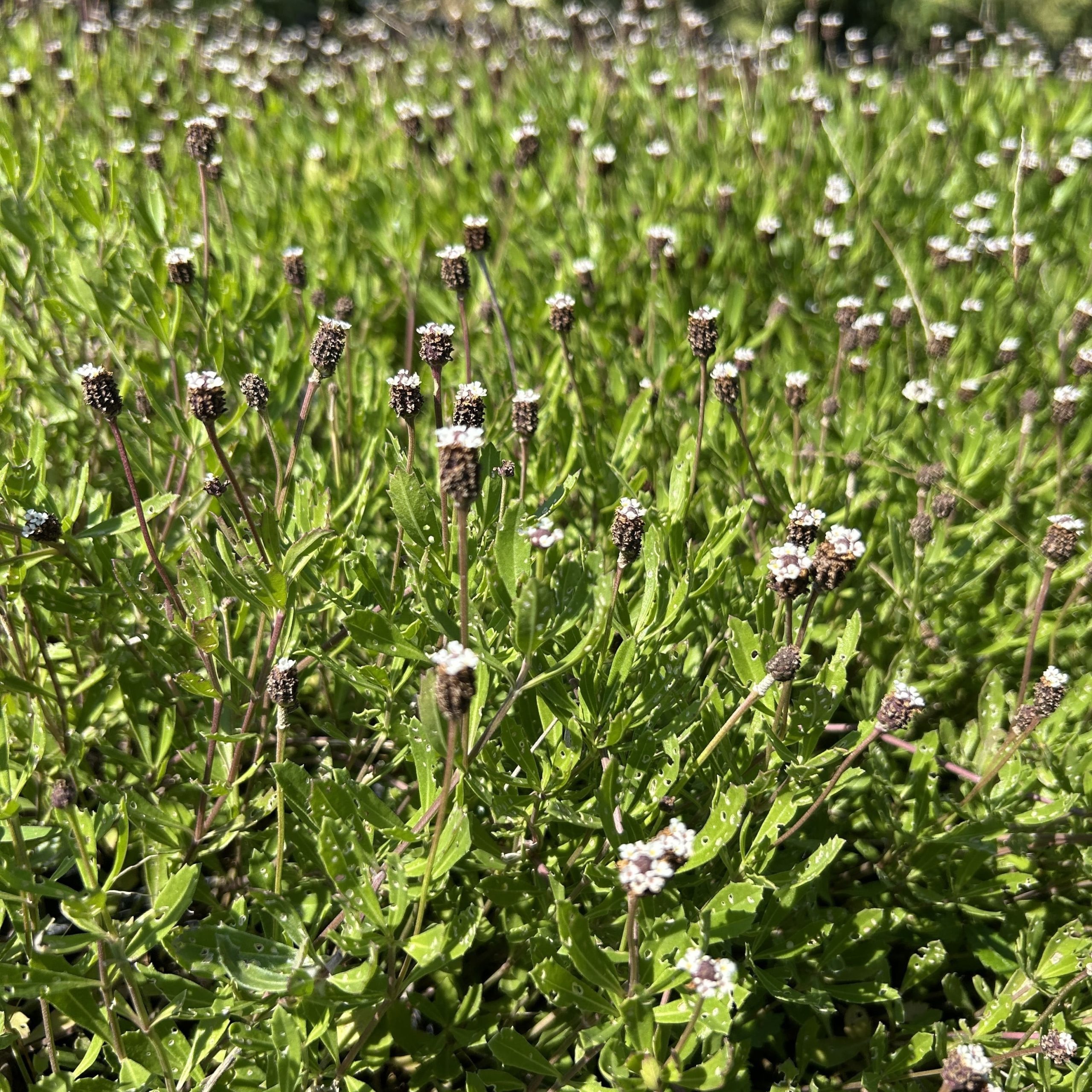
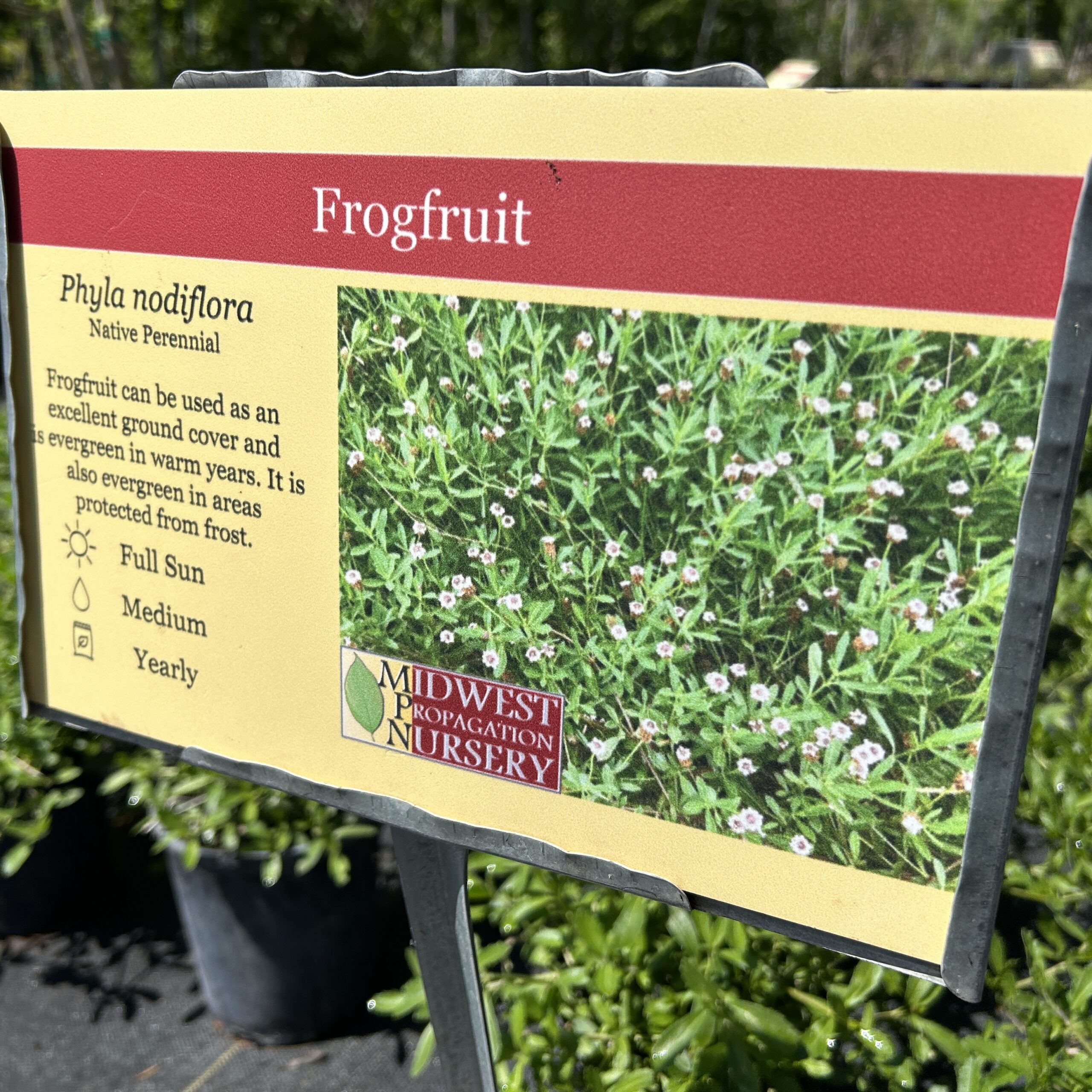
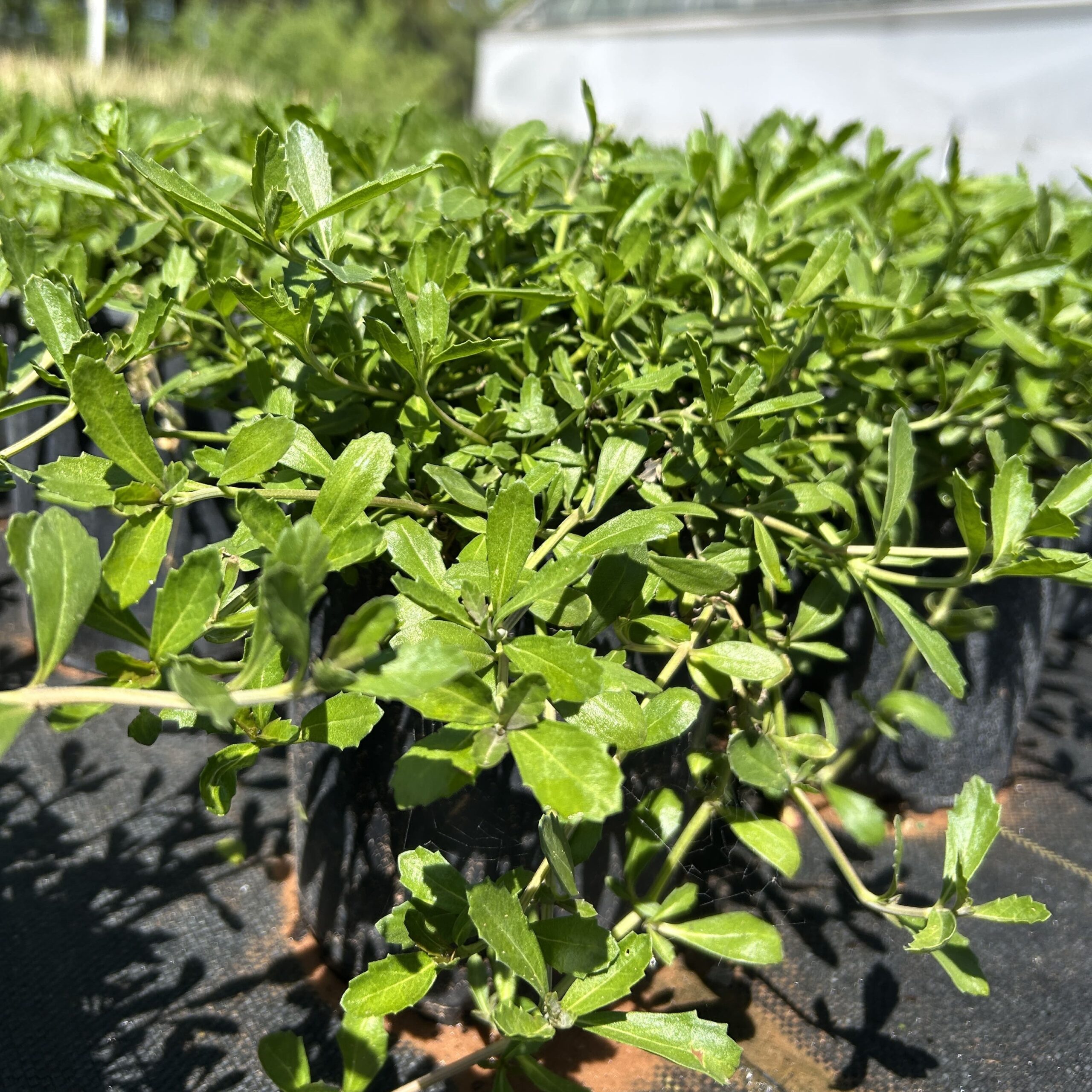
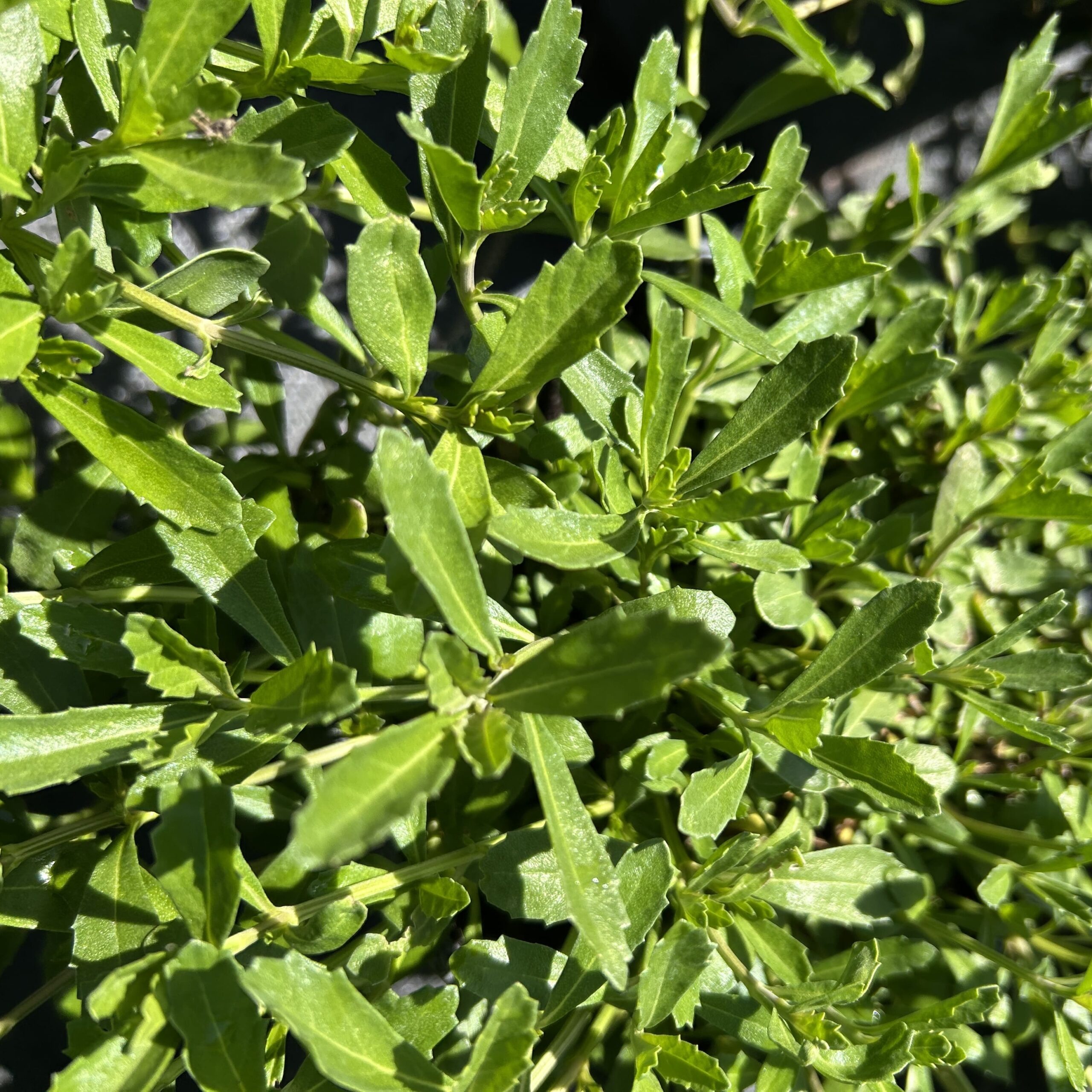
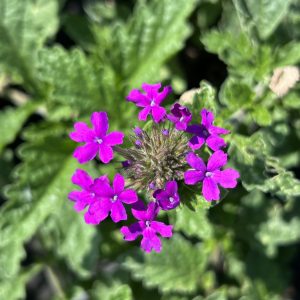
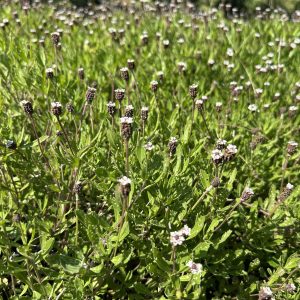
Frogfruit (Phyla nodiflora) is a native perennial groundcover known for its spreading green foliage and tiny white to pale pink flowers surrounding purple centers.
It grows well in full sun to partial shade and adapts to many soil types. Typically growing 3–6 inches tall, frogfruit spreads through creeping stems that root where they touch the ground. It tolerates drought and occasional flooding once established. Its warm-season flowers attract numerous pollinators, making it a useful choice for wildlife gardens and informal lawn alternatives.
Typical Uses:
Frogfruit (Phyla nodiflora) is valued for its adaptability, spreading habit, and ecological benefits. Its primary uses include:
- Groundcover: Forms a low carpet of foliage in sunny or partly shaded landscape beds.
- Pollinator Support: Small flowers provide nectar for bees and butterflies.
- Butterfly Host Plant: Supports caterpillars of the common buckeye, phaon crescent, and white peacock butterflies.
- Lawn Alternatives: Useful in informal lawns and areas receiving occasional foot traffic once plants are established.
ESTABLISHMENT AND CARE INSTRUCTIONS:
Planting and caring for Frogfruit is simple with these guidelines:
- Planting: Select full sun to partial shade. Plant in spring after severe freeze risk has passed, spacing plants approximately 12–24 inches apart depending on how quickly coverage is desired.
- Watering: Water regularly during establishment. Once established, provide supplemental water during prolonged drought to maintain fuller foliage and flowering.
- Pruning: Trim spreading stems to keep plants within their designated area. Occasional mowing at 4 inches or higher can tidy established plantings, though mowing removes flowers temporarily.
- Pest and Disease Resistance: Generally has few significant pest or disease problems. Some caterpillar feeding is expected because frogfruit is a butterfly host plant.
- Winter Care: Foliage may brown or die back during Oklahoma winters. Leave rooted stems undisturbed and tidy dead growth as plants resume growing in spring.
SPECIAL FEATURES AND USAGE:
- Butterfly Gardens: Combines nectar production and caterpillar food in one low-growing plant.
- Adaptable Landscapes: Tolerates moist conditions, occasional flooding, and periods of dryness.
- Containers and Hanging Baskets: Trailing stems can spill over container edges.
- Spreading Coverage: Rooting stems help fill open spaces; regular edging keeps growth from entering neighboring beds.

Reviews
There are no reviews yet.