


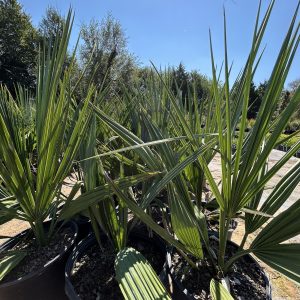
Dwarf sabal palm (Sabal minor), also known as dwarf palmetto, is a native evergreen palm known for its broad, fan-shaped leaves and compact growth habit. It is the only palm species native to Oklahoma.
It grows well in partial shade to full sun and prefers moist, organically rich soil. Typically reaching 4–6 feet tall with a similar spread, this slow-growing palm adds bold texture to gardens and natural landscapes. Creamy-white flowers appear in late spring or summer, followed by small black fruits. Its cold tolerance and distinctive foliage make it a valuable choice for adding tropical character to Oklahoma gardens.
Typical Uses:
Dwarf Sabal Palm (Sabal minor) is valued for its evergreen foliage, adaptability, and wildlife benefits. Its primary uses include:
- Garden Attraction: Large, green to blue-green leaves create a striking accent in shaded borders and mixed plantings.
- Understory Plantings: Well suited to woodland gardens and beneath trees where filtered sunlight reaches the ground.
- Wildlife Support: Flowers attract pollinators, while fruits provide food for birds and small mammals.
- Container Plantings: Its slow growth makes it useful in large patio containers, with additional winter protection for the roots.
ESTABLISHMENT AND CARE INSTRUCTIONS:
Planting and caring for Dwarf Sabal Palm is simple with these guidelines:
- Planting: Plant in spring or early summer to allow establishment before winter. Choose partial shade or sun and space plants approximately 4–6 feet apart. Keep the crown at its original growing depth.
- Watering: Water regularly during establishment. Established plants tolerate some drought, but consistent moisture supports better growth and appearance.
- Pruning: Remove only completely brown, dead fronds. Retain green foliage and protect the central growing point from damage.
- Pest and Disease Resistance: Generally has few significant pest or disease problems and is seldom browsed by deer.
- Winter Care: Generally suited to USDA Zones 7–10. Mulch around the root zone without covering the crown, and protect young plants during severe freezes.
SPECIAL FEATURES AND USAGE:
- Oklahoma Native Gardens: Offers the distinctive appearance of a palm while supporting regional native plantings.
- Moist Landscapes: Useful near ponds, in rain gardens, and in low areas that experience occasional flooding.
- Evergreen Structure: Fan-shaped foliage provides texture and visual interest throughout the year.
- Compact Palm Form: Its trunk usually remains underground, creating a low-growing silhouette rather than a tall tree.
Reviews
There are no reviews yet.