
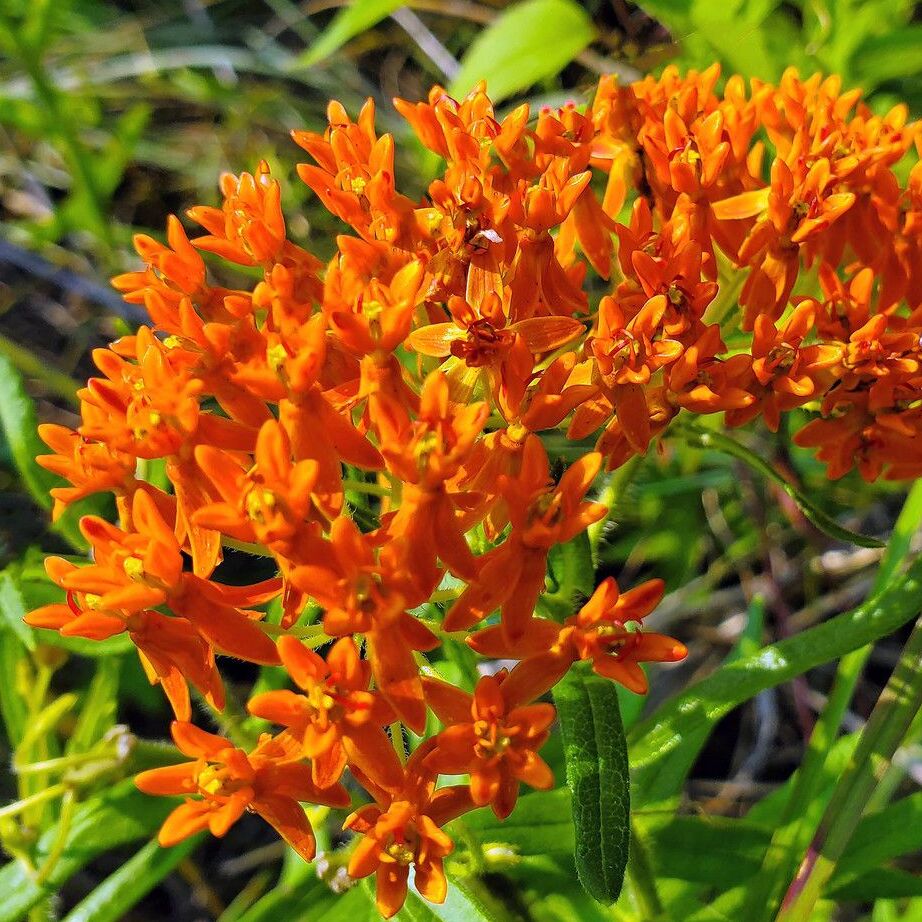
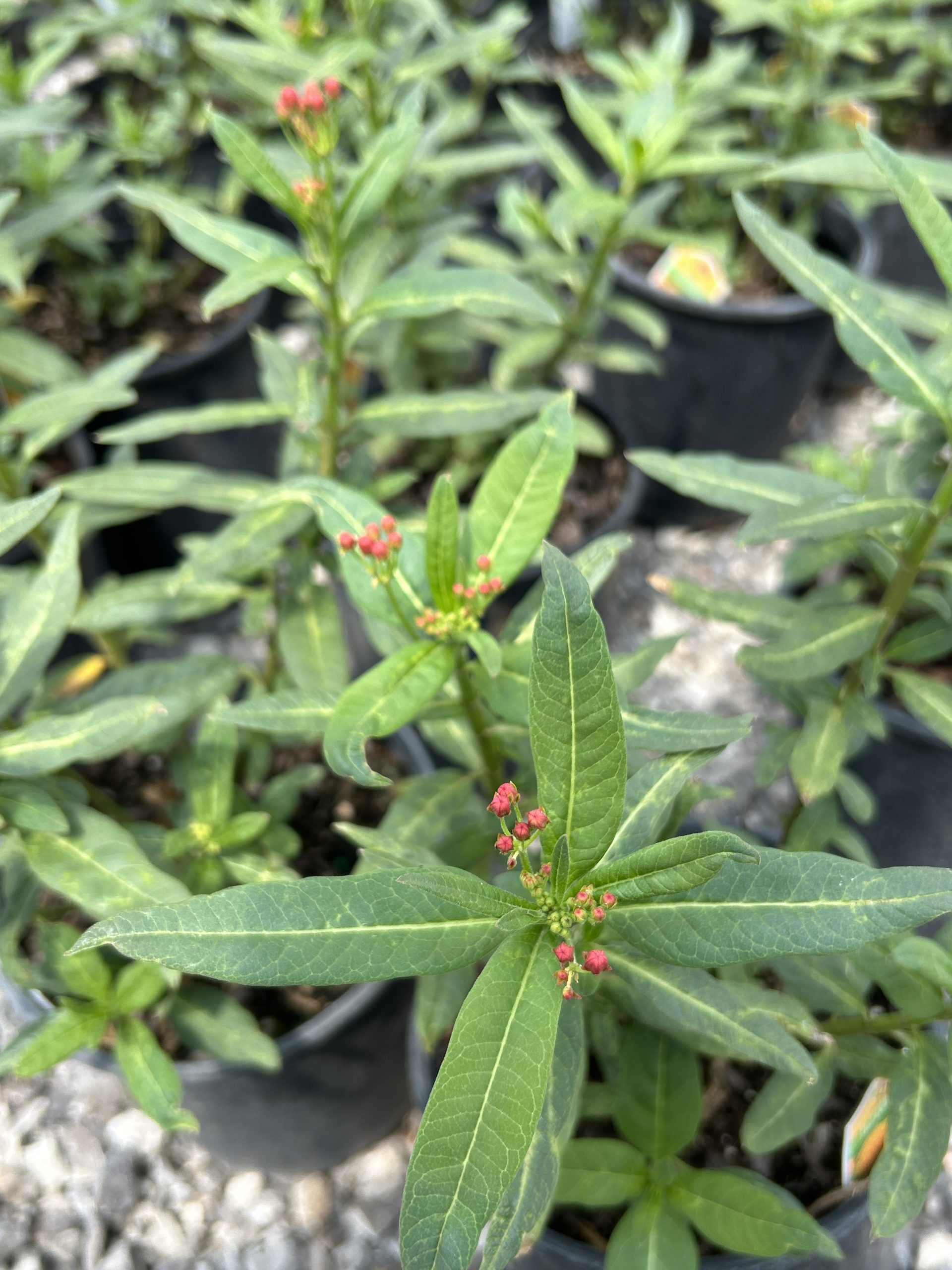
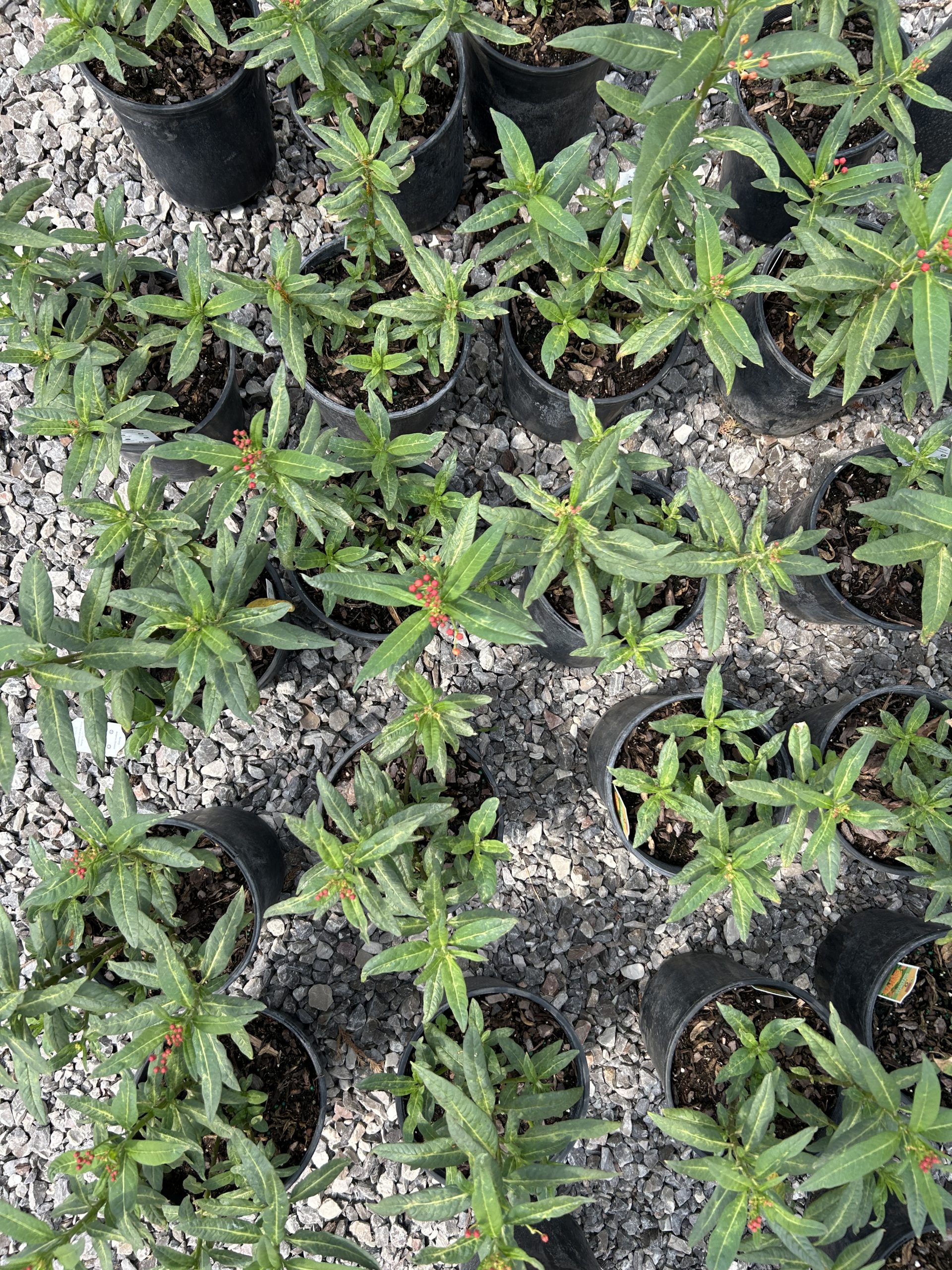
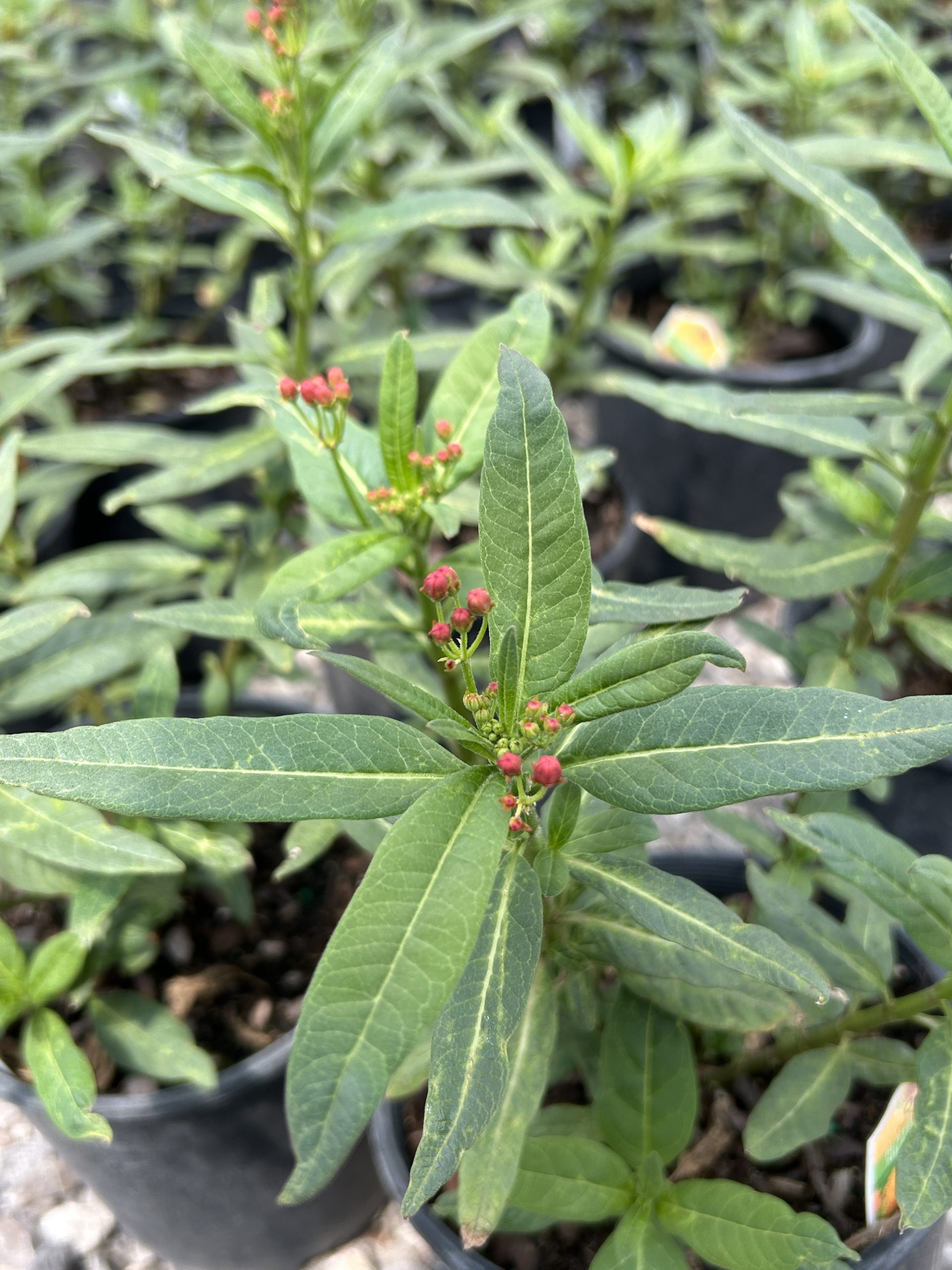
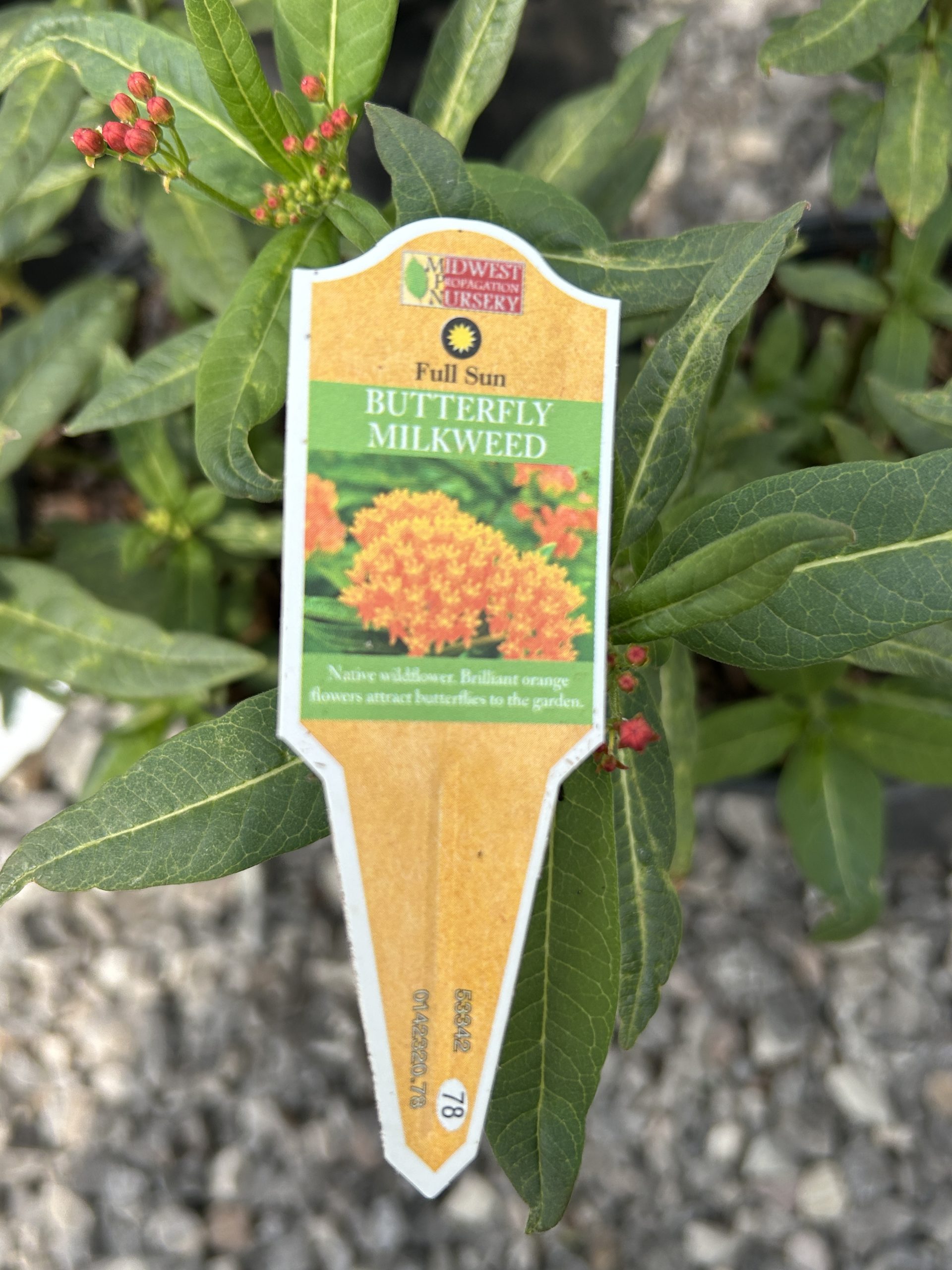
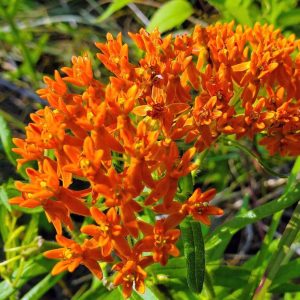
Butterfly milkweed (Asclepias tuberosa) is a native perennial wildflower known for its bright orange flower clusters.
It grows well in sunny locations with well-drained soil and is highly drought-tolerant once established. This plant is an important food source for monarch butterfly caterpillars and attracts many pollinators, including bees and butterflies. Butterfly milkweed typically blooms from late spring through summer, adding vibrant color to gardens and natural landscapes. Its low-maintenance nature and ecological benefits make it a popular choice for pollinator-friendly plantings.
Typical Uses:
Butterfly Milkweed (Asclepias tuberosa) is a colorful native wildflower valued for both its ornamental beauty and ecological benefits. Its primary uses include:
- Garden Attraction: Bright orange flower clusters provide striking color in perennial borders, meadows, and native plant gardens.
- Pollinator Magnet: Rich nectar attracts butterflies, bees, hummingbirds, and other beneficial pollinators throughout the growing season.
- Monarch Butterfly Host: Serves as an important host plant for Monarch butterfly caterpillars, supporting their life cycle and conservation.
ESTABLISHMENT AND CARE INSTRUCTIONS:
Planting and caring for Butterfly Milkweed is simple with these guidelines:
- Planting: Select a sunny location with well-drained soil. Plant in spring or fall, spacing plants 18–24 inches apart.
- Watering: Water regularly during establishment. Once established, Butterfly Milkweed is highly drought tolerant and requires minimal supplemental watering.
- Pruning: Remove spent flowers to encourage additional blooms and maintain a tidy appearance.
- Pest and Disease Resistance: Generally resistant to pests and diseases, making it a low-maintenance landscape choice.
- Winter Care: Leave stems standing through winter for wildlife habitat, then cut back in late winter or early spring before new growth emerges.
SPECIAL FEATURES AND USAGE:
- Monarch Waystation Planting: Essential component of butterfly gardens and Monarch waystations when combined with other native milkweeds and nectar plants.
- Naturalized Landscapes: Excellent for prairie restorations, native meadows, roadside plantings, and xeriscapes due to its drought tolerance.
- Cut Flower Arrangements: Long-lasting blooms can be used in fresh floral arrangements, adding vibrant color and native charm.
- Wildlife Support: Provides food and habitat for numerous pollinators and beneficial insects, enhancing local biodiversity.
Reviews
There are no reviews yet.