
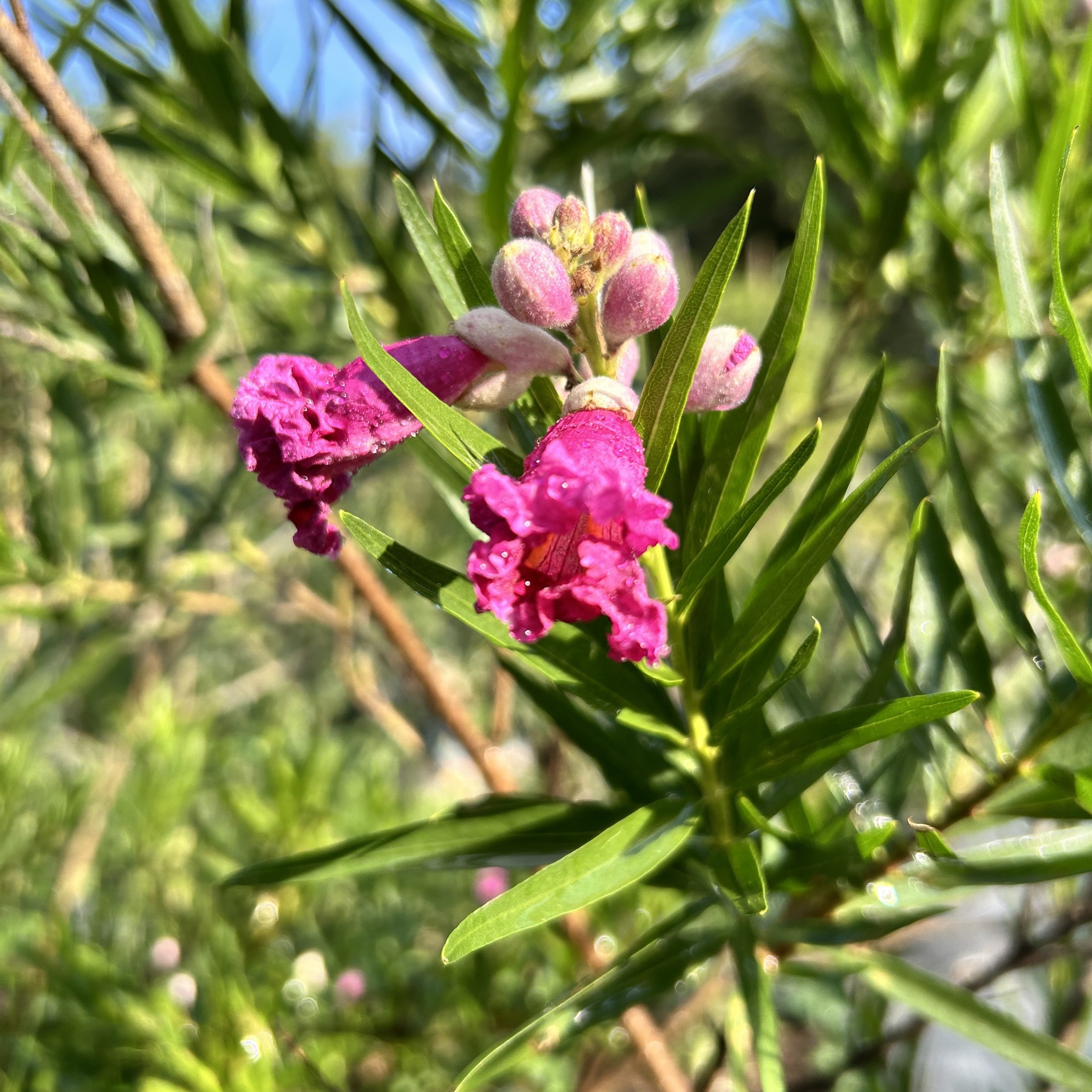
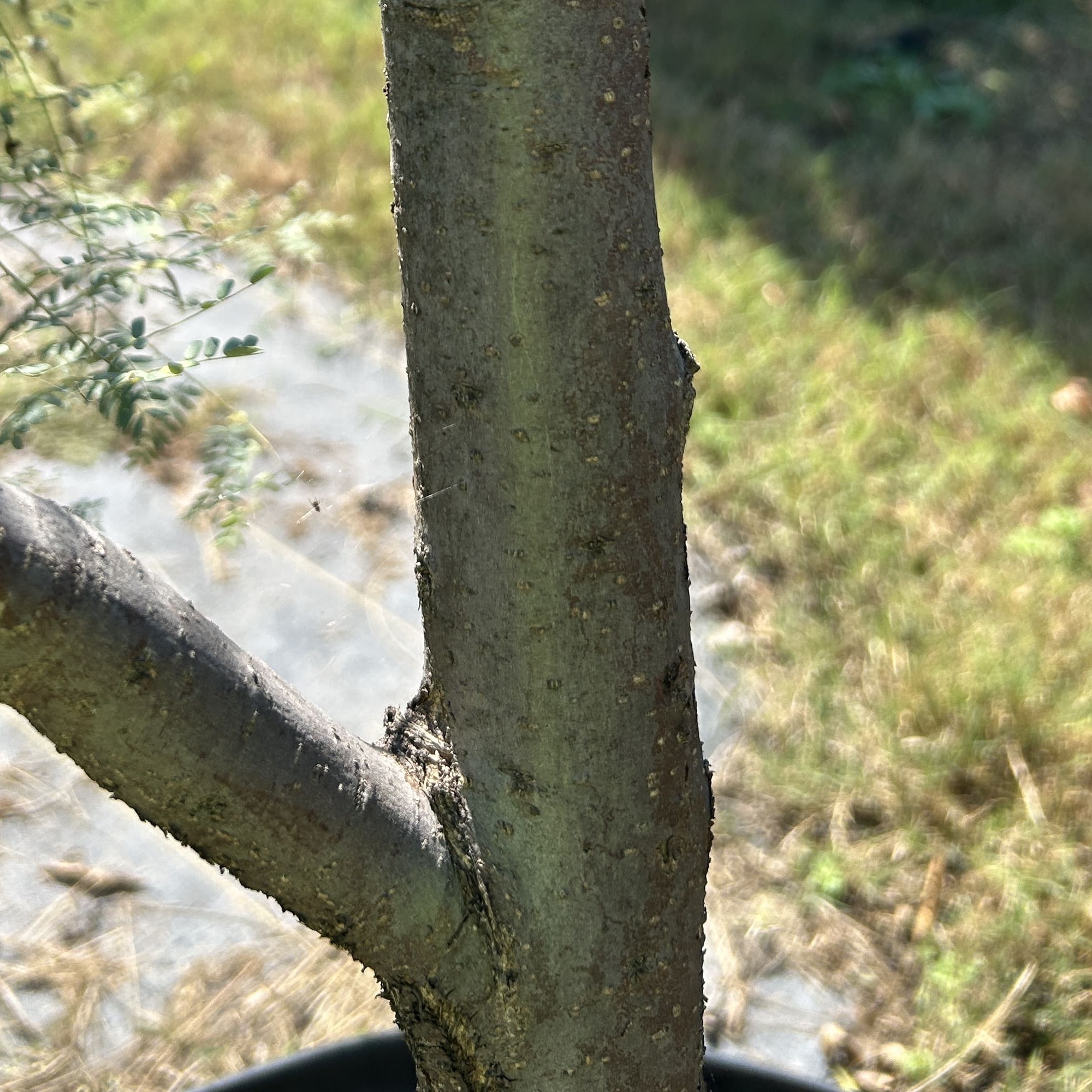
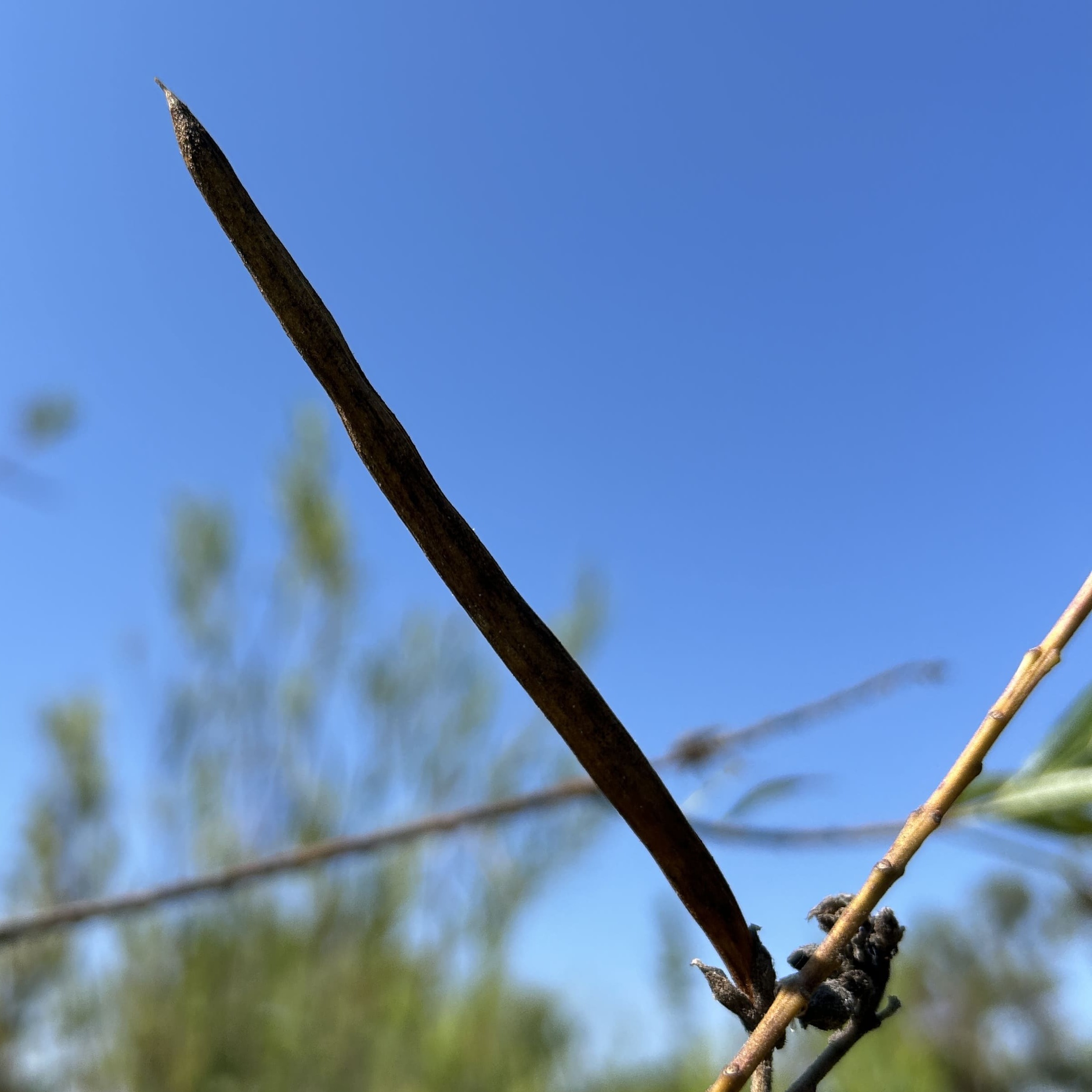
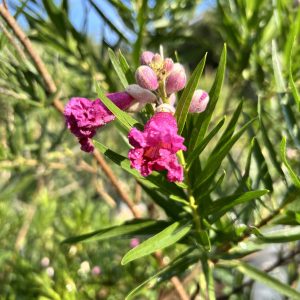
Burgundy desert willow (Chilopsis linearis ‘Burgundy’) is a deciduous ornamental tree known for its fragrant, reddish-purple flowers and slender, willow-like foliage. It is a cultivated selection of a species native to the southwestern United States and Mexico.
It grows best in full sun with well-drained soil and is highly drought tolerant once established. Typically reaching 15–30 feet tall and 10–20 feet wide, it develops an open, airy canopy. Trumpet-shaped flowers appear most abundantly in early summer, with additional blooms throughout the warm season. Its colorful flowers and tolerance of hot, dry conditions make it a useful choice for Oklahoma landscapes.
Typical Uses:
Burgundy Desert Willow (Chilopsis linearis ‘Burgundy’) is valued for its ornamental flowers and adaptability to dry conditions. Its primary uses include:
- Garden Attraction: Rich burgundy to reddish-purple blooms create a colorful focal point.
- Hummingbird Gardens: Fragrant, trumpet-shaped flowers attract hummingbirds and bees.
- Water-Wise Landscaping: Established trees require relatively little supplemental irrigation.
- Patio and Specimen Plantings: Its open branching provides light, filtered shade near outdoor seating areas.
ESTABLISHMENT AND CARE INSTRUCTIONS:
Planting and caring for Burgundy Desert Willow is simple with these guidelines:
- Planting: Choose full sun and excellent drainage. Plant in spring or early fall, allowing room for its mature canopy. Avoid low spots where water collects.
- Watering: Water deeply during establishment, allowing soil to dry between waterings. Once established, provide occasional deep watering during prolonged drought; avoid frequent, shallow irrigation.
- Pruning: Prune in late winter or early spring to remove dead, damaged, or crossing branches and develop the desired tree form. Flowers develop on new growth.
- Pest and Disease Resistance: Generally has few serious problems. Aphids may occasionally appear on new growth.
- Winter Care: Generally suited to USDA Zones 7–9. Apply mulch around the root zone, keeping it away from the trunk, and assess any winter damage after growth resumes.
SPECIAL FEATURES AND USAGE:
- Fragrant Flowers: Showy blooms add fragrance as well as color during the warmer months.
- Heat and Drought Tolerance: Well suited to hot, sunny sites with freely draining soil.
- Flexible Landscape Form: Can be maintained as a multi-trunked small tree or large shrub.
- Seasonal Structure: Narrow leaves create a fine-textured canopy in summer, while exposed branches provide winter interest after leaf drop.
Reviews
There are no reviews yet.