
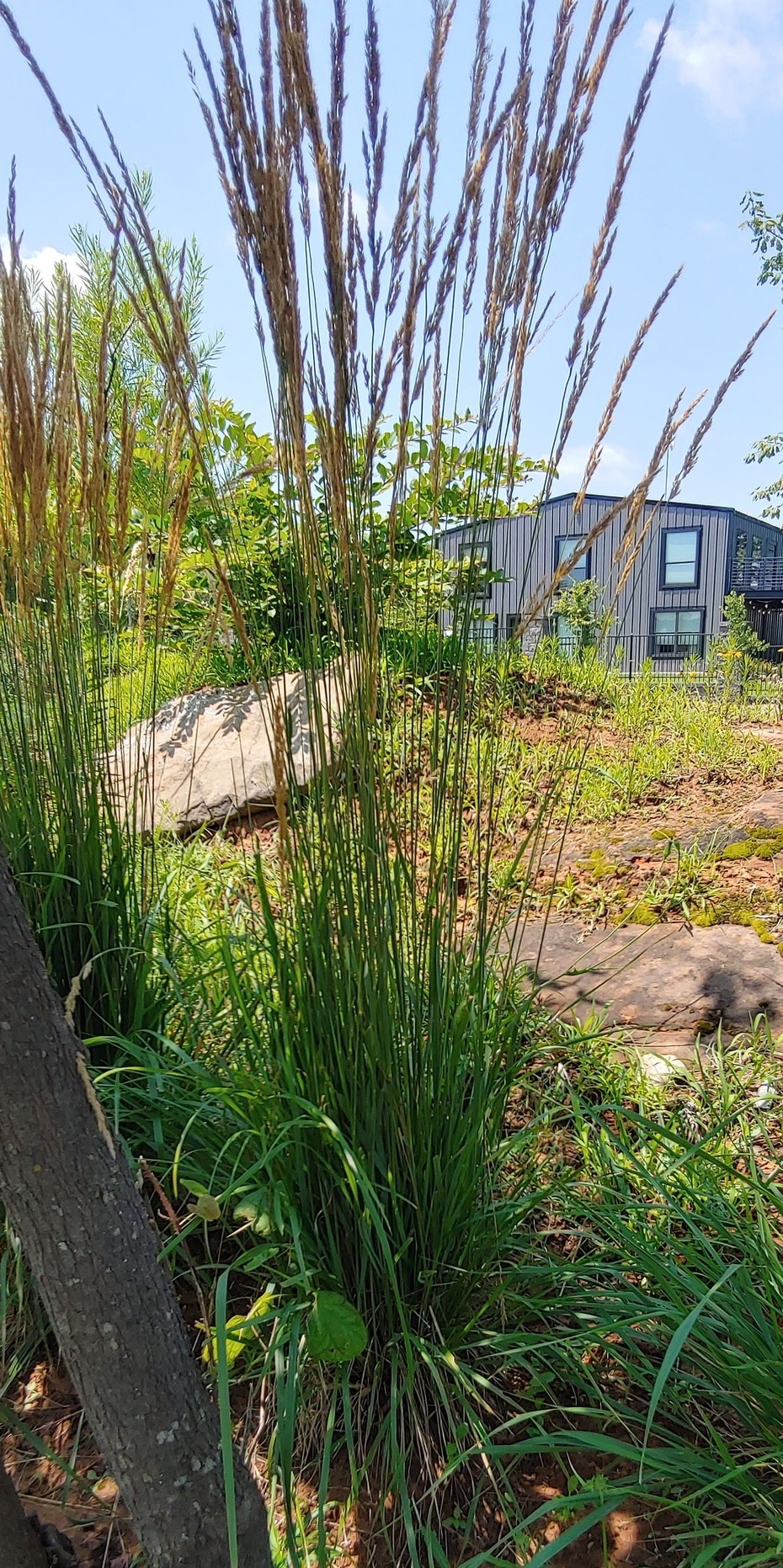
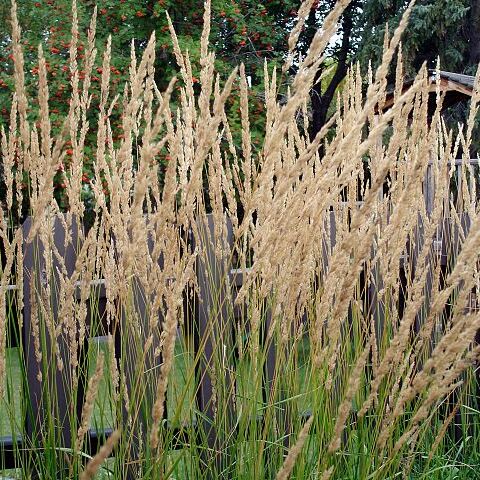
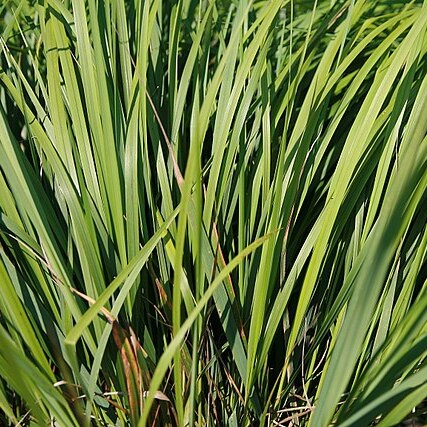
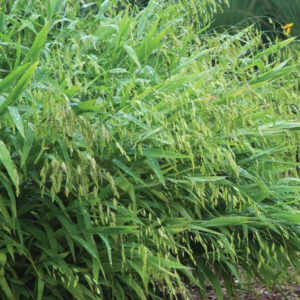
‘Karl Foerster’ feather reed grass (Calamagrostis × acutiflora ‘Karl Foerster’) is a perennial ornamental grass known for its narrow, upright growth and feathery flower plumes. It is a cultivated hybrid derived from grasses native to Europe and Asia.
It grows best in sunny locations with consistently moist soil and tolerates heavier clay soils. Green foliage forms neat clumps approximately 2–3 feet tall, with flowering stalks reaching 5–6 feet. Pinkish-purple plumes emerge in late spring to early summer, gradually turning golden tan and remaining attractive through winter. Its strong vertical form makes it a popular choice for borders, mass plantings, and landscape accents.
Typical Uses:
‘Karl Foerster’ Feather Reed Grass is valued for its upright structure and lasting seasonal interest. Its primary uses include:
- Vertical Accent: Tall, slender flower stalks add height without taking up much horizontal space.
- Mass Plantings: Repeated clumps create a consistent backdrop along walkways, fences, and garden borders.
- Mixed Perennial Gardens: Complements coneflowers, black-eyed Susans, coreopsis, and other flowering perennials.
- Seasonal Screening: Closely spaced groups create an airy screen during the growing season.
ESTABLISHMENT AND CARE INSTRUCTIONS:
Planting and caring for ‘Karl Foerster’ Feather Reed Grass is simple with these guidelines:
- Planting: Select full sun to light partial shade. Plant in spring or early fall, spacing clumps approximately 24–36 inches apart. Excessive shade can cause weaker, floppier growth.
- Watering: Water regularly during establishment. Maintain consistent moisture for best appearance, particularly during Oklahoma’s hot, dry summers.
- Pruning: Cut old stems and foliage back to approximately 6 inches in late winter before new shoots emerge. This cool-season grass begins growing early.
- Pest and Disease Resistance: Generally has few serious problems. Watch for rust during prolonged wet weather.
- Winter Care: Leave dried stalks standing for winter interest, then remove them during the annual late-winter cleanup.
SPECIAL FEATURES AND USAGE:
- Long Seasonal Interest: Early green growth is followed by summer plumes and persistent tan winter stalks.
- Clump-Forming Habit: Maintains a defined shape and produces sterile seed, preventing unwanted seedlings.
- Cut and Dried Arrangements: Flower stalks provide height and texture in fresh or dried bouquets.
- Clay Soil Tolerance: Adapts to heavier soils better than many ornamental grasses, provided adequate moisture is available.

Reviews
There are no reviews yet.